Posts Tagged ‘Water’

Water, Cool Clear Water

Thursday, April 29th, 2010

FORGET expensive machinery, the best way to purify water could be hiding in a cactus. It turns out that an extract from the prickly pear cactus is effective at removing sediment and bacteria from dirty water.

Many water purification methods introduced into the developing world are quickly abandoned as people don’t know how to use and maintain them, says Norma Alcantar at the University of South Florida in Tampa. So she and her colleagues decided to investigate the prickly pear cactus, Opuntia ficus-indica, which 19th-century Mexican communities used as a water purifier. The cactus is found across the globe.

New Scientist

Climate Change and Wine

Saturday, May 23rd, 2009

In Spain and Chile the wine growers, with vast acreages and millions of dollars at stake, are preparing for the inevitable. Changes in temperature affect the sugars, harvest times, and qualities of the wine. This piece on Spain was from early September, 2008.

In Spain, the country with more land under vines than any other, it is harvest time for wine growers.

Ten years ago, most wineries would start gathering in their grapes during September. However, climate change has caused the temperature to rise and now grape varieties are ripening up to a month earlier.

…Wine makers, like Miguel Torres, are starting to take the threat of climate change very seriously.

Mr Torres is one of Spain’s biggest winemakers but he is also something of a climate change boffin and all around his vineyard you can see how seriously he takes this problem.

Between the Torres vines, giant solar screens generate heat energy, dozens of photovoltaic panels produce electricity and water is recycled.

“We are dedicating 5m euros (£4m) with two purposes,” he explains.

“Purpose number one is reforestation, we have done this already in Catalonia and in Canary Islands.

“And the second purpose is anything related to research on trapping and storing carbon dioxide, and as a consequence of this we are already experimenting in our own cellars trying to capture the CO2 produced at fermentation.”

BBC

The report from Chile is datelined May, 23 of 2009.

…new studies by Chilean scientists suggest climate change could pose huge challenges for the country.

The scientists say their models show projected temperature increases of at least 1C to 1.5C and a drop in rainfall of at least 10 to 15% in the next 40 years.

“Vines are sensitive to heat stress,” he says. “Hotter temperatures can cause too fast a ripening process which can affect productivity and the quality of the wine.”

The Merlot grape is thought to be amongst those sensitive to changes in the climate.

More generations of harmful insects created by a temperature increase of just 1C could also affect grape production.

Another area of great concern is the long-term availability of water.

As in other Andean countries, the rate at which many of Chile’s glaciers are melting has increased significantly in recent years, due mainly to temperature rises.

Climate scientists say Chile is probably less dependent on glacial melt for water supplies than some areas of neighbouring Peru or Bolivia.

However, they worry that the combination of more demand, less rainfall, less melting snow, and less water trapped in glaciers could combine to cause a serious decline in water availability, particularly in the summer months.

Based on hydrological simulations, [estimates are that] by 2065 the water in the [Maipo River - by far the largest source of irrigation and drinking water for the central region] could have fallen by 70%, from 170 cubic metres per second to no more than 60.

BBC

Water.Not.

Thursday, May 1st, 2008

“California just came through its driest March-April rain period – 2.3 inches of precipitation in the Sierra – since records began being collected in 1859. The biggest reservoir in the state, Lake Shasta, is at 75 percent of its average capacity for this time of year. The second-biggest reservoir, Lake Oroville, is at 59 percent.

State officials warned today that widespread water rationing was a very real possibility this summer. Another few years like this, experts say, and we might start running drastically short of water.”

And the options are not pretty.

Cyprus Rainfall Has Fallen by about 20 percent over the past 35 years.

Monday, April 21st, 2008

Drought-hit Cyprus to ship water from Greece

NICOSIA, April 21 (Reuters) – Cyprus, facing its worst drought in a decade, will start importing water from Greece within the next two months, Agriculture Minister Michalis Polinikis said on Monday.

Lake Mead: 13 Years to Run Your Boats

Wednesday, February 13th, 2008

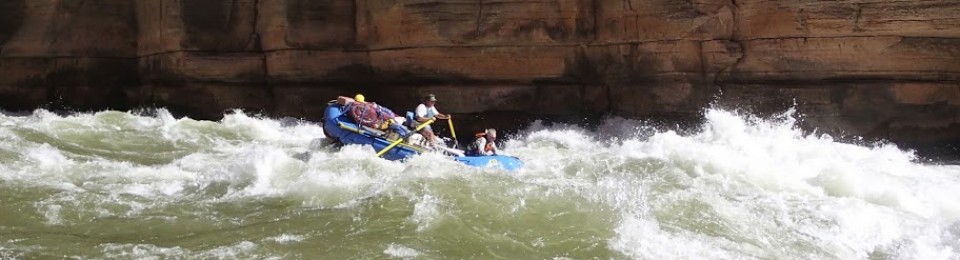
Lake Mead could not be described as my favorite place on earth, but it is the take-out for many of us who consider the Colorado River run through the Grand Canyon our favorite place. Most runners will avoid Lake Mead and take-out up river a bit, but those who have seen it will testify, it is one, big body of water. Winds will whip over it raising white-caps and overturning small boats. It is the pleasure capital of the South West for those who love big boats, big motors and smoky air. Well, folks, it’s about to disappear. This is one more hurry-up among many that have been popping up like the unseasonable tornadoes in the South.

Lake Mead, the vast reservoir for the Colorado River water that sustains the fast-growing cities of Phoenix and Las Vegas, could lose water faster than previously thought and run dry within 13 years, according to a new study by scientists at the Scripps Institution of Oceanography.

“We were really sort of stunned,” Professor Barnett said in an interview. “We didn’t expect such a big problem basically right on our front doorstep. We thought there’d be more time.”

He added, “You think of what the implications are, and it’s pretty scary.”

Lake Mead Drying Up

Or, to put it another way, a-fuckin-mazing!

And just in case you think that McCain is green enough, that allowing him in wouldn’t be all that bad:

…while McCain claims that climate change is one of his top three issues, his agenda the subject is pretty much non-existant. McCain won’t stand up for mandatory caps (despite the fact that his own bill on the matter amounts to a mandate), and supports emissions reductions that are significantly lower than those that Obama and Clinton support. His idea of good climate legislation is more in line with the Lieberman-Warner bill, which calls for less than a 70 percent reduction of emissions by 2050. The Democrats, meanwhile, have stood up in favor of emissions reductions to 80 percent below 1990 levels by 2050 — the kinds of reductions current science says we need.

And both Clinton and Obama have outlined cap and trade plans that would auction off 100 percent of pollution permits and invest the proceeds in clean energy technologies that will reduce carbon emissions. But the Lieberman-Warner bill currently on the table, which is closer to McCain’s preferred approach to cap-and-trade, only auctions a small percentage of credits, giving most of them away to the very industries responsible for global warming. The Democrats also support subsidies and tax incentives to help develop a green economy, which McCain doesn’t support.


McCain – a paler shade of green…

China Drought

Wednesday, January 16th, 2008

Just thought you’d like to know…

The waters of the Yangtze have fallen to their lowest levels since 1866, disrupting drinking supplies, stranding ships and posing a threat to some of the world’s most endangered species.

Asia’s longest river is losing volume as a result of a prolonged dry spell, the state media warned yesterday, predicting hefty economic losses and a possible plague of rats on nearby farmland.

News of the drought – which is likely to worsen pollution in the river – comes amid dire reports about the impact of rapid economic growth on China’s environment.


142 Year Low

Great Lakes Shrinking

Monday, October 22nd, 2007

We’ve posted before in these pages news about the Great Lakes’ own drought. Of course it isn’t the same as the drought in the South East which is putting the drinking water for Atlanta in peril but it is a decrease in water levels nonetheless.

Water levels in the Great Lakes are falling; Lake Ontario, for example, is about seven inches below where it was a year ago. And for every inch of water that the lakes lose, the ships that ferry bulk materials across them must lighten their loads by 270 tons — or 540,000 pounds — or risk running aground, according to the Lake Carriers’ Association, a trade group for United States-flag cargo companies.

The water levels in all five Great Lakes — Superior, Michigan, Huron, Erie and Ontario — are below long-term averages and are likely to stay that way until at least March, according to the Army Corps of Engineers. (The same is true at Lake St. Clair, which straddles the border between the state of Michigan and the province of Ontario and is between Lake Huron and Lake Erie; it is not considered one of the Great Lakes, although it is part of the Great Lakes system.)

Most environmental researchers say that low precipitation, mild winters and high evaporation, due largely to a lack of heavy ice covers to shield cold lake waters from the warmer air above, are depleting the lakes. The Great Lakes follow a natural cycle, their levels rising in the spring, peaking in the summer and reaching a low in the winter, as the evaporation rate rises.

In the past two years, evaporation has been higher than average, and not enough rain and snow have fallen in the upper lakes — Superior, Michigan and Huron — which supply water to the lower lakes, to restore the system to its normal levels…

Great Lakes Shrink